
Challenge
Immune checkpoint inhibitors (ICI) have revolutionized the treatment of lung cancer, especially for patients with advanced or metastatic non-small cell lung cancer (NSCLC). However, a significant portion of NSCLC patients demonstrate resistance to ICIs, with estimates suggesting that around 50-80% of patients do not benefit from ICI therapy due to either primary resistance (no initial response) or acquired resistance (tumor relapse after an initial response)1, 2.
Dr. Arutha Kulasinghe of the University of Queensland and Prof. Ken O’Byrne at the Princess Alexandra Hospital were interested in studying the immune and metabolic landscape of ICI-treated NSCLC patients using a 45-plex multiplex immunofluorescence (mIF) panel. However, extracting clinically relevant biomarkers with current mIF analysis methods requires a tradeoff between cell typing accuracy, discovery of novel cell states, and model generalizability.
Solution
Dr. Kulasinghe’s team, in collaboration with Dr. Ettai Markovits from Nucleai employed our deep learning-based mIF pipeline to profile 27 ICI-treated patients and analyze predictive patterns of response and resistance.
Discovery of a first-of-its-kind immunotherapy resistance signature in NSCLC
The team identified a subset of tumor cells in the non-responder population, with upregulated proteins in the pentose phosphate metabolic pathway (PPP), which was characterized by upregulation of ASCT2, a glutamine transporter, as well as pNRF2 and G6PD. These “PPP high” cells displayed characteristics of aggressive tumor cells, such as higher proliferation and lower differentiation (Figure 1).
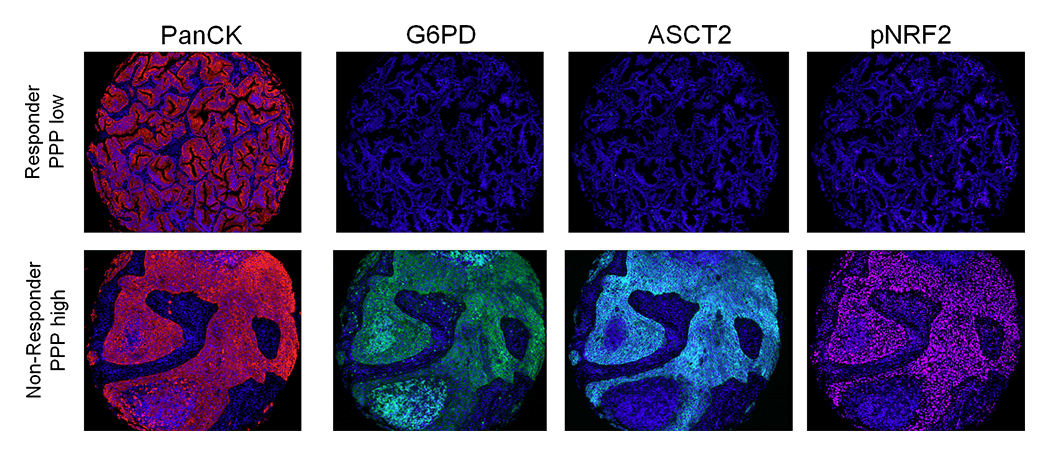
Figure 1. A representative image of a responder (PPP-low) and a non-responder (PPP-high) demonstrating differences in ASCT2 (a glutamine transporter), G6PD, and pNRF2 (regulators of the pentose phosphatase pathway).
Tumors with a high percentage of PPP+ tumor cells (>40%) were resistant to PD-1 blockade and showed reduced overall survival (OS) rates (Figure 2). These findings pave the way for personalized therapeutic strategies targeting specific metabolic pathways to enhance treatment efficacy and patient outcomes.
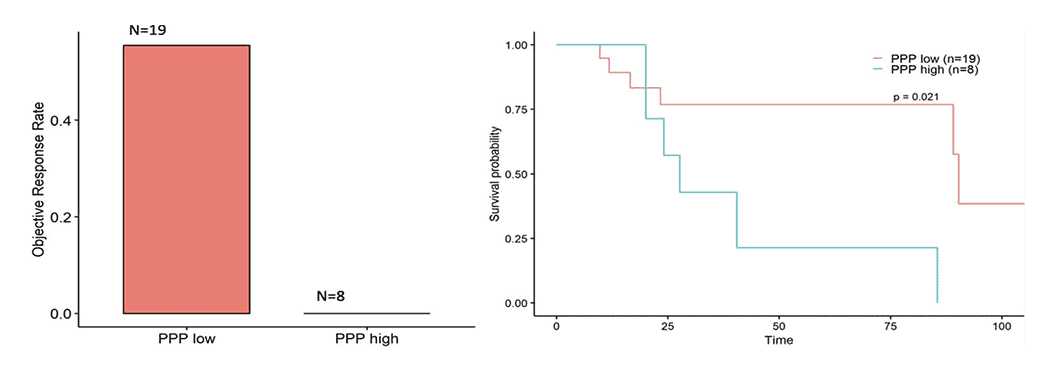
Figure 2. Identification of a unique PPP+ metabolic state in tumors, associated with resistance to PD-1 blockade and reduced overall survival.
Combining cell typing with subtyping – Supervised and Unsupervised methods
Our unique approach of combining supervised cell typing with unsupervised subtyping enabled the team to maintain cell typing accuracy while identifying novel functional states and cell subtypes, which can be linked to clinical response (Figure 3). This study underscores the clinical importance of metabolic profiling in predicting treatment outcomes and patient prognosis.
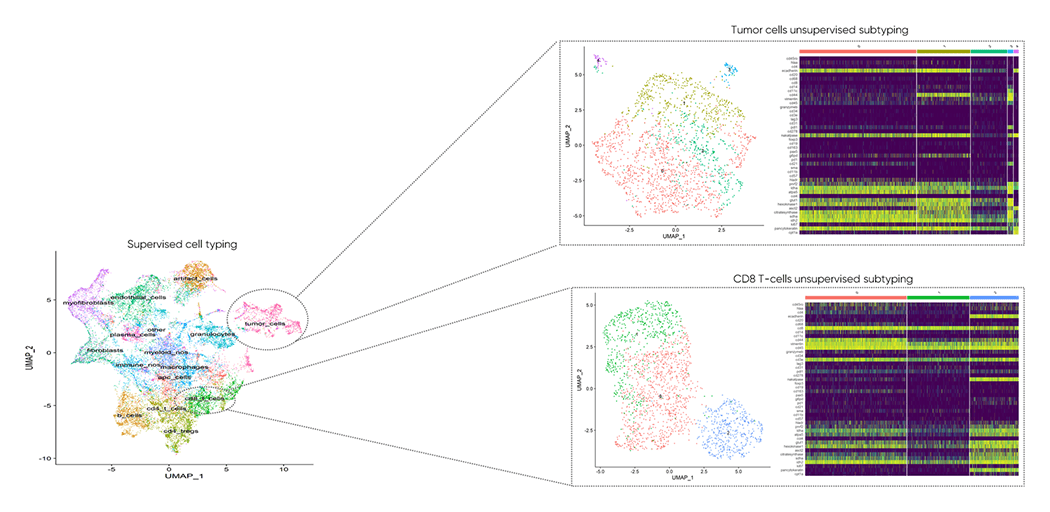
Figure 3. Our novel approach for cell typing and subtyping combining supervised and unsupervised methods, unveiled a nuanced landscape of distinct cell subsets in the tumor microenvironment, primarily categorized by metabolism and activation states.
References:
- Huang Y, Zhao JJ, Soon YY, Kee A, Tay SH, Aminkeng F, Ang Y, Wong ASC, Bharwani LD, Goh BC, Soo RA. Factors Predictive of Primary Resistance to Immune Checkpoint Inhibitors in Patients with Advanced Non-Small Cell Lung Cancer. Cancers (Basel). 2023 May 12;15(10):2733. doi: 10.3390/cancers15102733. PMID: 37345072; PMCID: PMC10216169.
- Zhou S, Yang H. Immunotherapy resistance in non-small-cell lung cancer: From mechanism to clinical strategies. Front Immunol. 2023 Apr 6;14:1129465. doi: 10.3389/fimmu.2023.1129465. PMID: 37090727; PMCID: PMC10115980.
- James Monkman, Rotem Czertok, Shai Bookstein, Becky Arbiv, Yuval Shachaf, Ron Elran, Kenneth Bloom, Oscar Puig, Ken O’Byrne, Ettai Markovits, Arutha Kulasinghe; Abstract 1158: Spatially resolved cell profiling unveils tumor metabolic states associated with immunotherapy response in NSCLC. Cancer Res 15 March 2024; 84 (6_Supplement): 1158.