Tissue intelligence across
indications and drug modalities
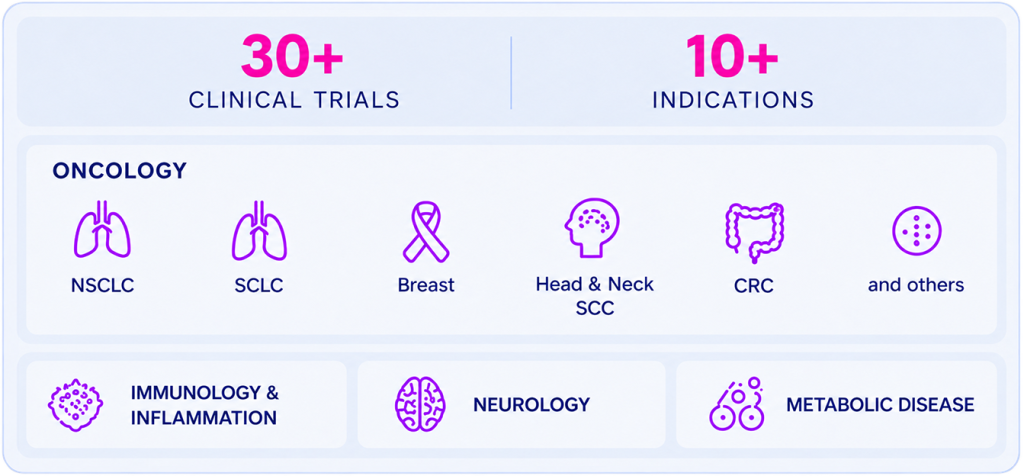
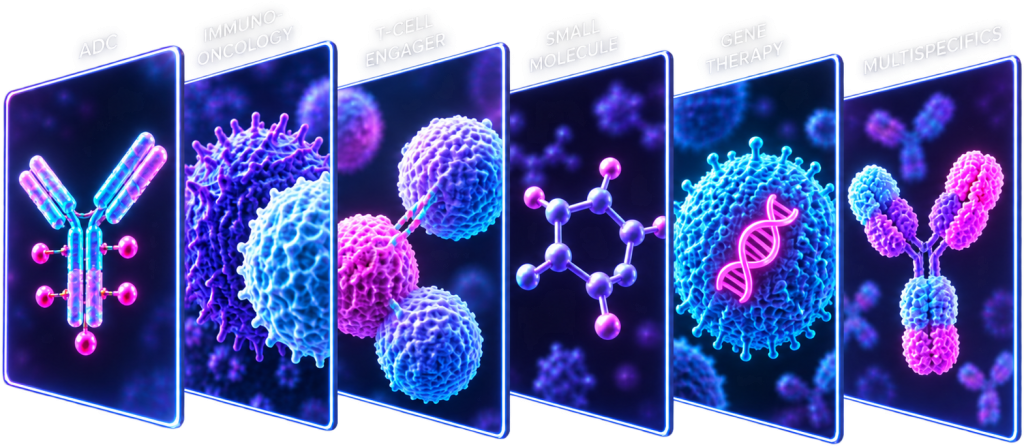
We work wherever tissue biology impacts program decisions, supporting drug development across oncology, immunology and inflammation, neurology, and metabolic disease—spanning ADCs, immuno-oncology, T-cell engagers, small molecules, gene therapies, and multispecifics. The platform adapts to the tissue question each program presents.
Why Tissue Analysis Matters, by Drug Class
ADCs (Antibody-Drug Conjugates)
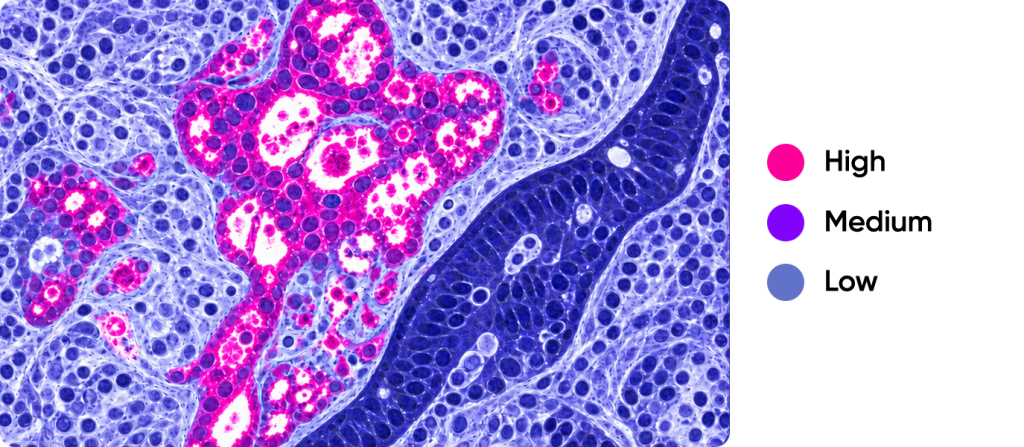
Efficacy depends on more than target expression level. Target heterogeneity, spatial distribution, bystander effects, and the tumor microenvironment shape response and resistance. Nucleai maps these factors at the cell and tissue level, as reflected in our large-scale ADC translational research partnership with Gilead.
Immuno-Oncology (Checkpoint Inhibitors)
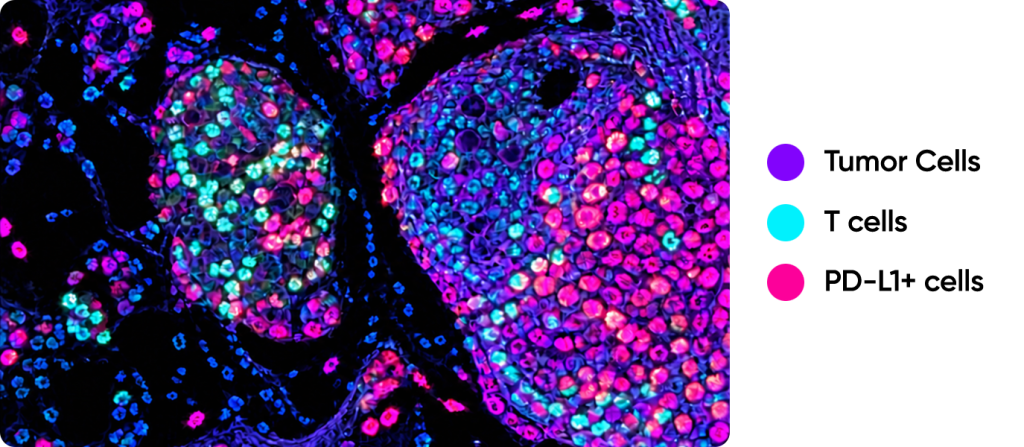
Response depends on the tumor-immune interface: TIL density, PD-L1 heterogeneity, immune contexture, and the spatial proximity between immune and tumor cells. Nucleai's IO work with Genmab and Merck KGaA spans PD-L1 scoring reproducibility and multimodal response prediction.
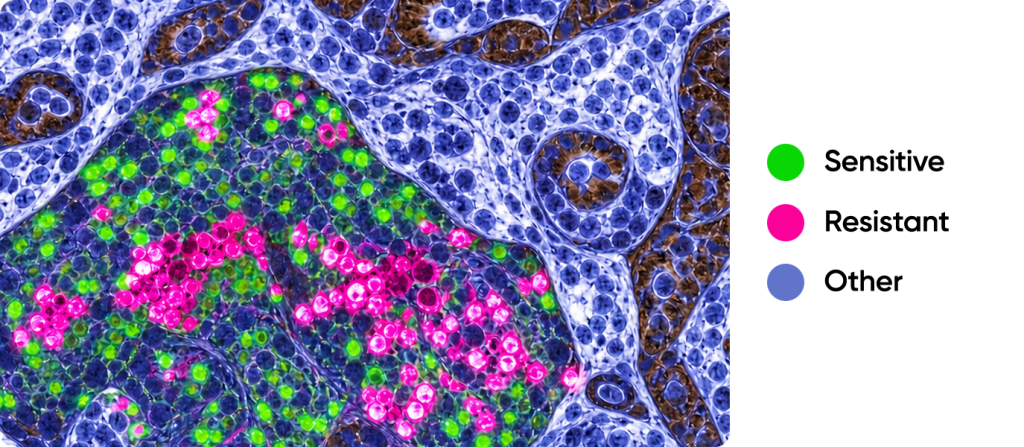
Small Molecules
Where target engagement and resistance play out directly in tissue, spatial features link pharmacodynamic and resistance-mechanism questions back to the slide, showing which cells adapted, and where, not just that response changed. Nucleai’s work with Adlai Nortye on a PI3K inhibitor identified H&E-derived features associated with survival benefit.
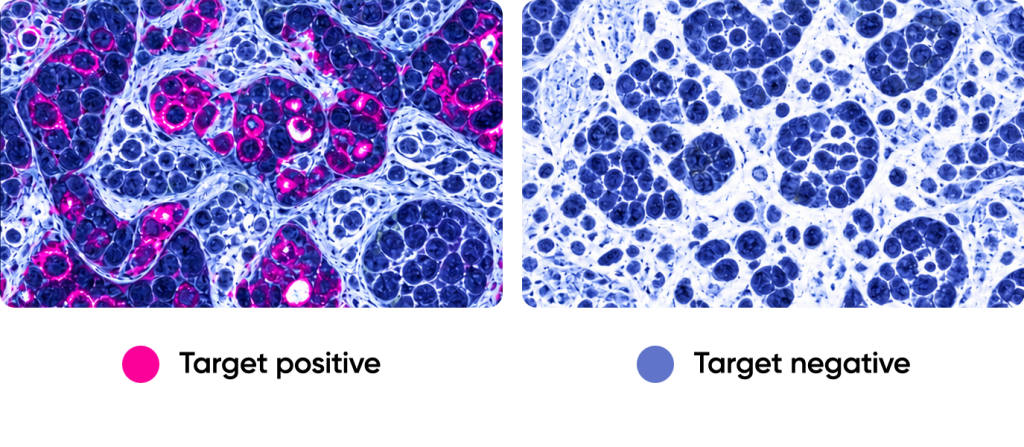
T-Cell Engagers
T-cell engager activity depends on bringing target-expressing tumor cells and T cells into close spatial proximity. Nucleai maps target expression alongside T-cell infiltration, distribution, and tumor–T-cell proximity, helping characterize the tissue environments that may support—or limit—effective T-cell engagement.
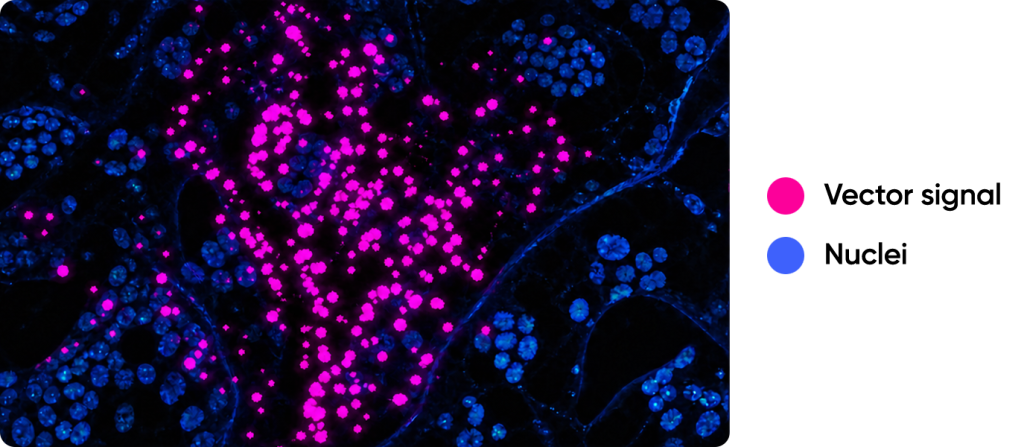
Gene Therapies
Vector biodistribution and on-target expression are tissue questions by definition. Nucleai quantifies transgene-linked signal alongside the tissue architecture it depends on — pairing the two is what turns a biodistribution readout into a mechanistic one, rather than a presence-or-absence call.

Multispecifics
Multispecifics require understanding where multiple targets are expressed, whether they co-localize, and in which cell populations. Nucleai supports multiplex IHC, multiplex fluorescence, and virtual multiplexing to quantify target co-expression and spatial relationships,. In a recent study, Nucleai applied its AI-driven platform to quantify target expression, localization, cell-type specificity and target co-localization for multispecific drug development.
Across Indications